Diagram — what is being calculated
01 / Inputs
Bottom plate to top plate. NZS 3604 scope: ≤ 6.5 m.
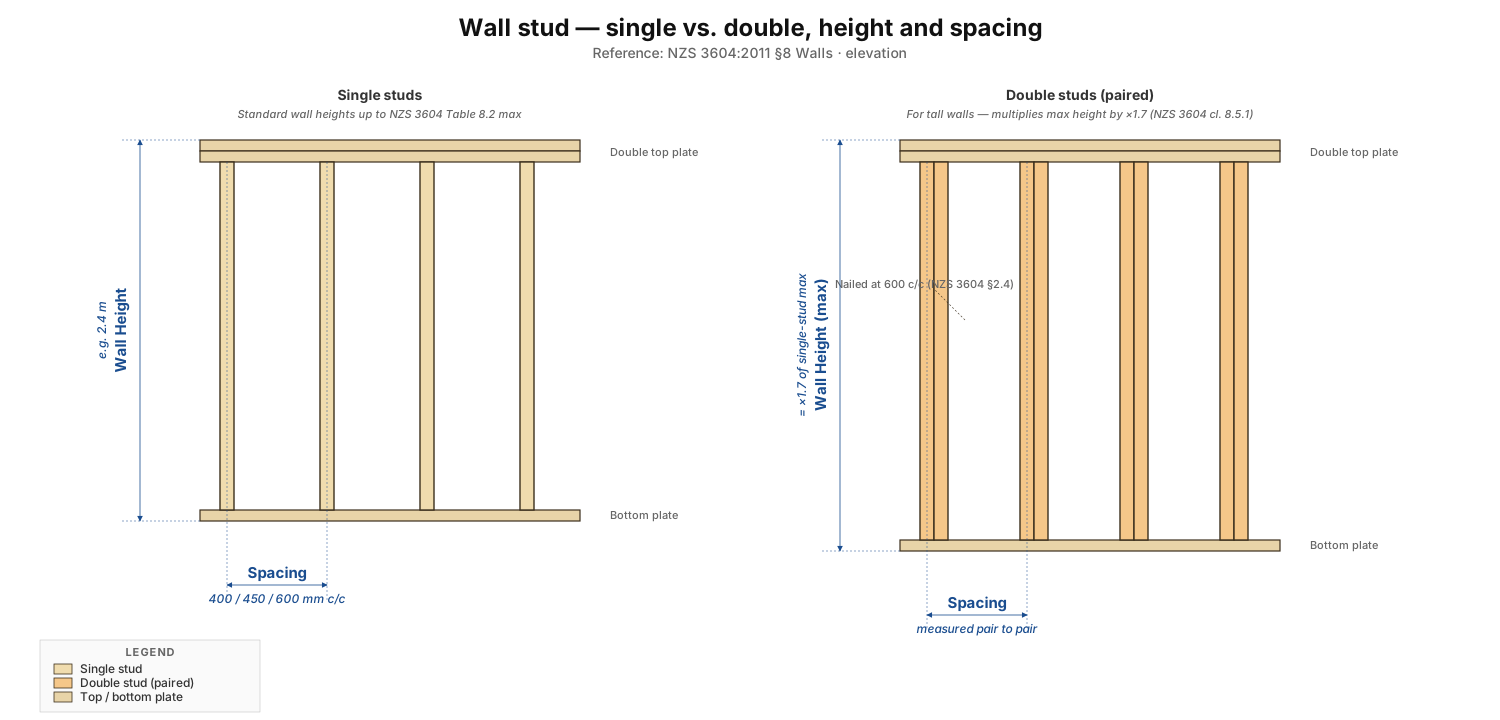
Tables 8.1–8.6: These tables determine whether single or double studs are required to resist wind loads on loadbearing walls. Values shown are for single-storey, light-roof studs — heavy roof, two-storey support, and lintel/jamb trimmer studs require separate lookup or specific engineering design.
02 / Result
Enter inputs to determine stud requirement
Outside NZS 3604 scope:
Stud requirement by configuration
| Stud Size | Spacing | Max Height (single) | Max Height (double) | Status |
|---|
NZS 3604:2011 — scope and limitations. Tables 8.1–8.6 apply to loadbearing timber stud walls in timber-framed buildings within NZS 3604 scope. Non-loadbearing walls are not covered. Studs at openings, at panel edges, and supporting two storeys require specific consideration. Buildings with heights or exposures outside these tables require engineering design. All results must be verified by a Chartered Professional Engineer or Licensed Building Practitioner.
NZS 3604:2011 Tables 8.1–8.6 — Maximum Stud Height (mm) for Single Studs @ 600c, SG8
Single stud only. For double studs, maximum height is approximately doubled. Source: NZS 3604:2011 Tables 8.1–8.6. Derived from BRANZ study.
| Stud | Low | Medium | High | V. High |
|---|---|---|---|---|
| 90×45 @ 400c | 3000 | 2700 | 2400 | 2100 |
| 90×45 @ 600c | 2700 | 2400 | 2100 | 1800 |
| 140×45 @ 400c | 3600 | 3300 | 3000 | 2700 |
| 140×45 @ 600c | 3300 | 3000 | 2700 | 2400 |
| 190×45 @ 400c | 4000 | 3800 | 3600 | 3300 |
| 190×45 @ 600c | 3800 | 3600 | 3300 | 3000 |
Values are indicative single-stud heights (mm) for SG8. SG10 values are approximately 10% higher.